
Other
AM: Water-mediated exfoliation achieves kilogram-scale MXene, DFT/MD analysis of Li⁺–H₂O hydrogen bond network
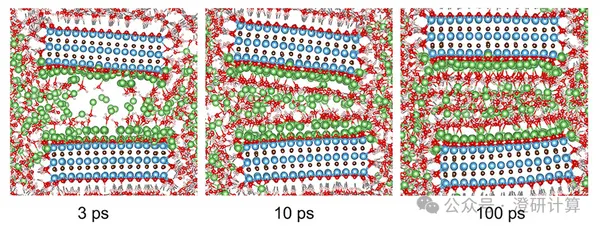
Read OriginalThe challenge of large-scale MXene preparation lies in achieving both high yield and preserving large flake size and low defects. Traditional methods such as sonication, oscillation, or strong shearing can improve exfoliation efficiency, but they easily break up the layer fragments and introduce defects, thus affecting electrical conductivity, mechanical properties, and ion sieving. This paper in *Advanced Materials* by the teams of He Daping and Shen Jie from Wuhan University of Technology and Tan Rui from Swansea University proposes water-mediated exfoliation as an alternative to strong mechanical exfoliation. The article modulates the coordination environment of Li⁺ in the interlayer by water molecules, forming a Li⁺–H₂O hydrogen bond network, weakening interlayer electrostatic attraction and van der Waals interactions, thus achieving kilogram-scale, monolayer, large-size, low-defect MXene preparation. The theoretical calculations, combining DFT and MD, explain why water molecules promote interlayer expansion and why defect-free MXene channels exhibit higher Li⁺/Mg²⁺ selectivity.
Read Original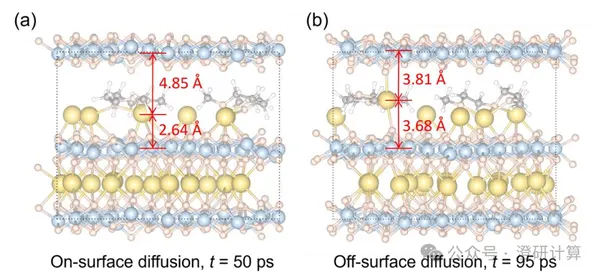
Other
Don't let your calculations go wrong because of your graphing! 8 top journal examples to teach you how to create advanced computational graphs
Read OriginalTheoretical calculations are an essential part of publishing papers, but producing good calculation results is only the first step. What impresses editors, reviewers, and readers is often the ability to organize complex physical images into a clear, beautiful, and logical diagram. In this issue, we've selected eight examples of computational graphs published in top journals such as Nature and Nature Energy, focusing on their strengths in graphic layout, color schemes, mechanism representation, and the integration of data and diagrams. We'll see how DFT, AIMD, MD, CI-NEB, COMSOL, or machine learning results can be transformed into more aesthetically pleasing, sophisticated, and publishable research graphs.
Read Original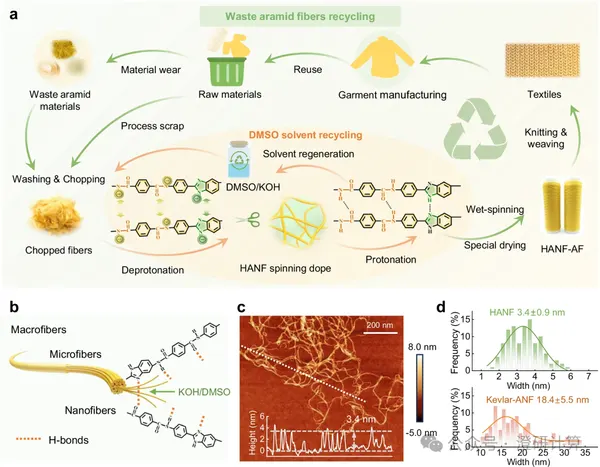
Other
Nature Communications: 3.4 nm aramid nanofibers woven into a thermal vest, H⁺-mediated assembly and theoretical calculation interpretation
Read OriginalAerogel fibers are suitable for use in thermal insulation fabrics, but a long-standing trade-off between strength and thermal insulation has existed. Increasing porosity can reduce thermal conductivity; however, if the structure is too loose, the fibers cannot withstand stretching, bending, weaving, and sewing. This Nature Communications paper uses waste heterocyclic aramid fibers as raw materials to first prepare 3.4 nm aramid nanofibers, and then obtains knittable, high-strength, low-thermal-conductivity aerogel fibers through H⁺-mediated hierarchical assembly. The theoretical calculations focus on "why aramid can dissociate, how H⁺ induces assembly, and why hierarchical porosity simultaneously improves strength and thermal insulation," connecting molecular interactions, charge regulation, assembly processes, and macroscopic properties.
Read Original